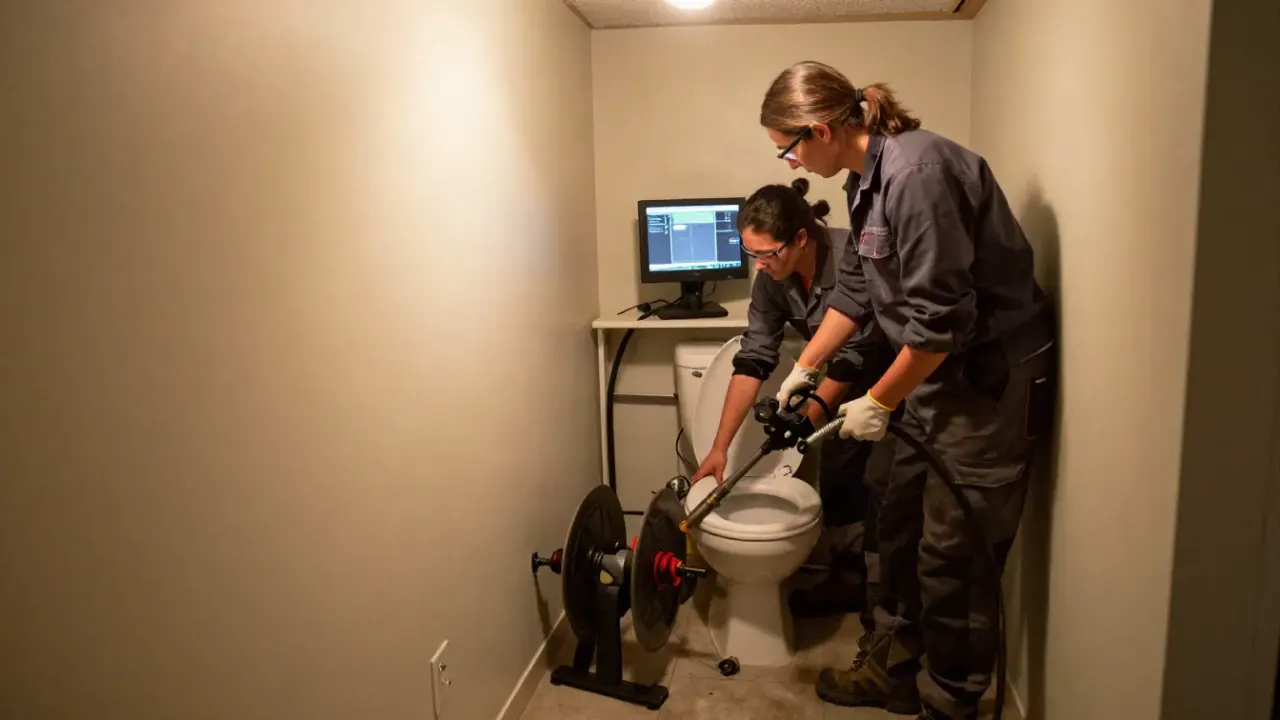
Clear stubborn buildup and get wastewater moving again
Biofilm and Sludge Removal Woburn MA
Biofilm and sludge removal Woburn MA helps homeowners and businesses facing slow drains, recurring clogs, drain odor, or a sewer backup caused by organic buildup. Our sludge removal service targets the coating and settled debris restricting your pipe, then checks the line so you know what caused the trouble. If fixtures are gurgling or wastewater is returning, we find the affected section and choose a cleaning method suited to your pipe.
biofilm and sludge removal Woburn MA is a drain-cleaning service that loosens and flushes organic film, grease, soap residue, and settled debris from drain and sewer pipes when buildup restricts flow or creates recurring clogs. Biofilm is a sticky layer that traps particles against the pipe wall; sludge is the heavier material that collects in low spots. We assess symptoms, inspect the line where access allows, and select mechanical cleaning or water jetting based on pipe material and condition. A camera check helps us distinguish removable buildup from pipe damage or scale.
Woburn properties range from older buildings with cast iron pipe to homes with newer PVC pipe, and the line's age and material change how we clean it. Cold-season use, cooking grease, laundry lint, and years of soap residue can add to slow drains and odors. If you are searching for how to remove biofilm from drains Woburn MA, the safe starting point is identifying the pipe and the location of the deposit. We use a drain camera when needed, then explain the work and price before cleaning.
The service covers locating the affected drain, assessing accessible pipe condition, selecting a suitable cleaning method, removing accessible biofilm and sludge, and testing drainage afterward. Camera inspection is used when useful and available through the access point. If findings show roots, hard scale, a damaged pipe, or a separate fixture fault, we explain the additional work required instead of treating cleaning as a repair. We give you the price before work begins.
01
✓
Symptom And Access Check
We identify which fixtures are affected, check nearby drains, and locate a practical cleanout or fixture access. This helps determine whether the issue is isolated or shared and whether a camera can reach the suspected section.
02
✓
Pipe Condition Assessment
We consider pipe material, visible condition, and the type of deposit before choosing equipment. Camera inspection can reveal soft organic buildup, standing water, root intrusion, or signs of damage that change the cleaning plan.
03
✓
Targeted Deposit Removal
We use a suitable mechanical tool or water-based cleaning method to loosen and remove accessible biofilm, grease, and settled sludge. The method depends on line condition and the deposit, not a one-size-fits-all setting.
04
✓
Flow Test And Findings
After cleaning, we run water through the affected fixture and check for steady drainage, return flow, or gurgling. When camera access permits, we review the cleaned section and explain any remaining scale or structural concern.
How it works
What To Expect
We start by asking which fixtures are slow, when the problem began, and whether you have heard gurgling or noticed a sewer backup. This takes about 10 to 20 minutes in a straightforward visit. You show us the affected sink, floor drain, or cleanout, and we check nearby fixtures to see whether the issue is local or shared.
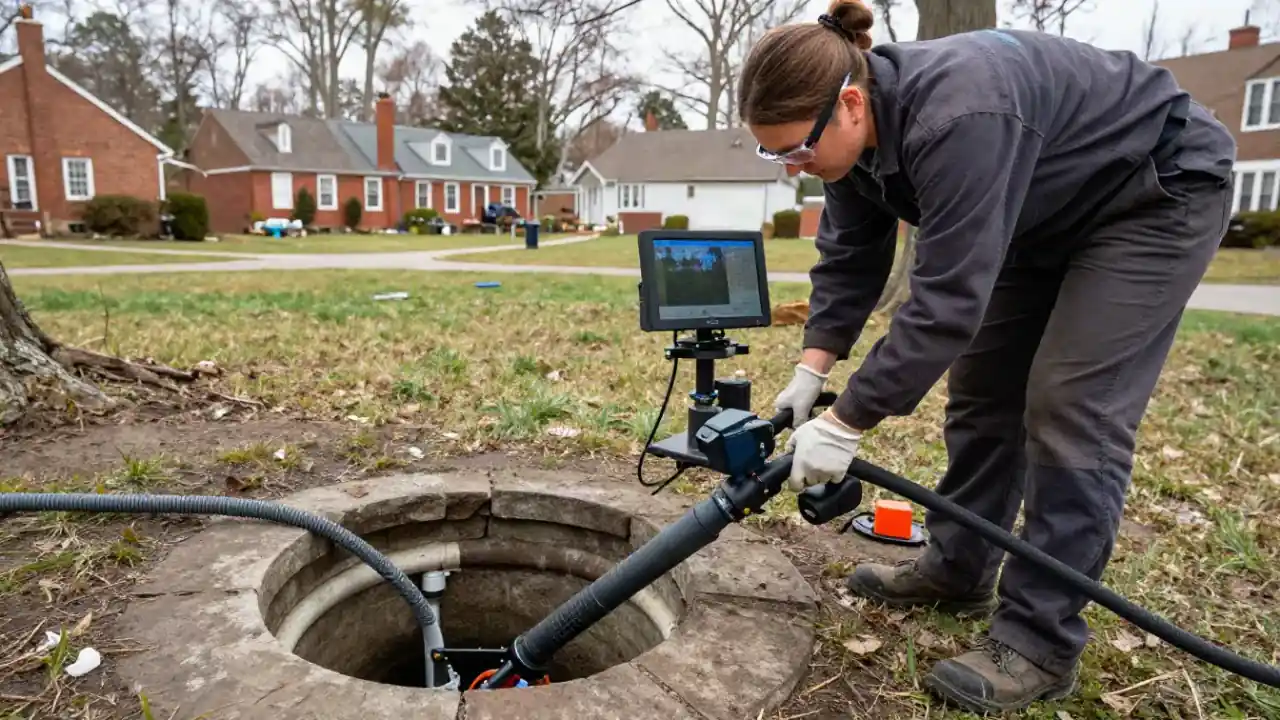
We locate a suitable cleanout or fixture access and check pipe material and visible condition. A drain camera or sewer camera helps identify the buildup and its position when the route allows. The inspection usually takes 15 to 30 minutes, and we explain whether the footage shows removable deposits, roots, standing water, or a structural concern.
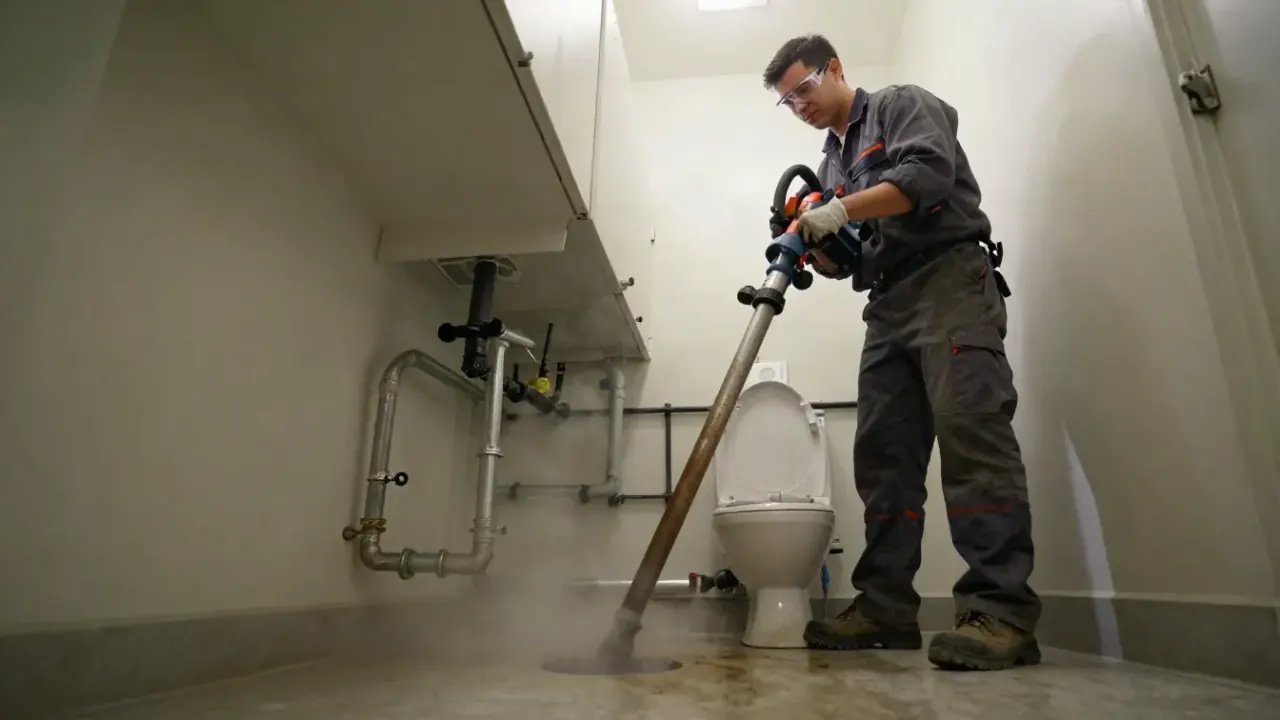
We match the cleaning method to the pipe, deposit, and severity. A drain snake or plumbing auger can break through localized material; a hydro jetting machine can scour deposits from a compatible line. Before work, we tell you the recommended approach and price. You can ask questions while we set up the equipment and protect the surrounding area.
Our technician feeds the selected tool through the line in controlled passes, removing or flushing biofilm, grease, and settled sludge. A typical accessible branch may take 30 to 90 minutes to clean; extensive buildup or a long sewer run takes longer. We monitor how the line responds and stop if the pipe condition calls for a safer alternative.
We run water through the affected fixture and check for normal drainage, gurgling, or return flow. Where appropriate, we review a camera image after cleaning and show you any remaining scale or damage. Before leaving, we explain what we removed, what the test showed, and practical maintenance steps for your Woburn property.
STEP 01Trace Symptoms
We start by asking which fixtures are slow, when the problem began, and whether you have heard gurgling or noticed a sewer backup. This takes about 10 to 20 minutes in a straightforward visit. You show us the affected sink, floor drain, or cleanout, and we check nearby fixtures to see whether the issue is local or shared.
Tools & methods
Tools And Cleaning Methods
01
✓
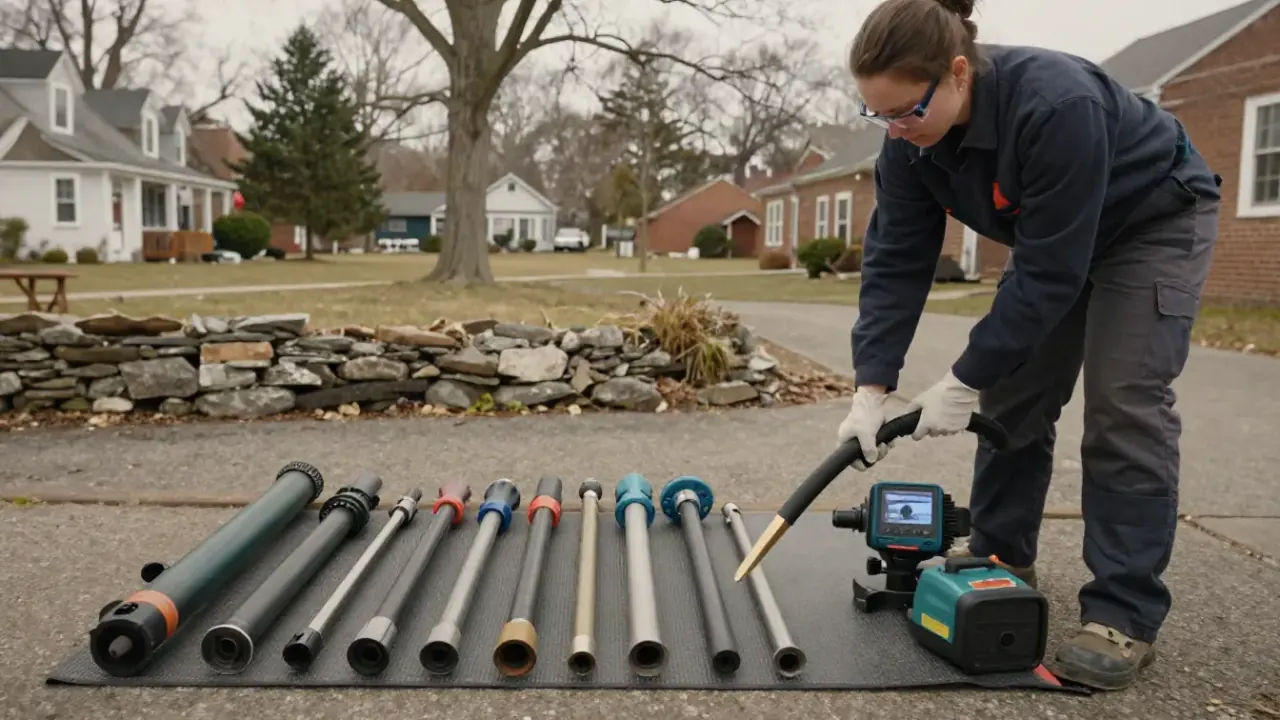
Drain camera
We use a drain camera to view accessible pipe interiors, locate deposits, and check for standing water or visible damage before choosing a cleaning method.
02
✓
Plumbing auger
A plumbing auger breaks through localized obstructions and reaches material beyond a trap. We select the head and approach based on the line and the blockage.
03
✓
Hydro jetting machine
For compatible pipes, controlled water jetting can remove grease and soft deposits from the pipe wall. We assess condition and access before bringing the equipment into the line.
04
✓
Jetter nozzle
A jetter nozzle directs water forward or backward to loosen and carry deposits through an appropriate line. Nozzle choice depends on the pipe route and material being removed.
05
✓
RIDGID equipment
RIDGID drain-cleaning equipment provides mechanical options for clearing localized buildup. We use the appropriate cable and head for the access point and pipe condition.
Real results
Before and after.
Biofilm and Sludge Removal
Kitchen Branch Flow Restored
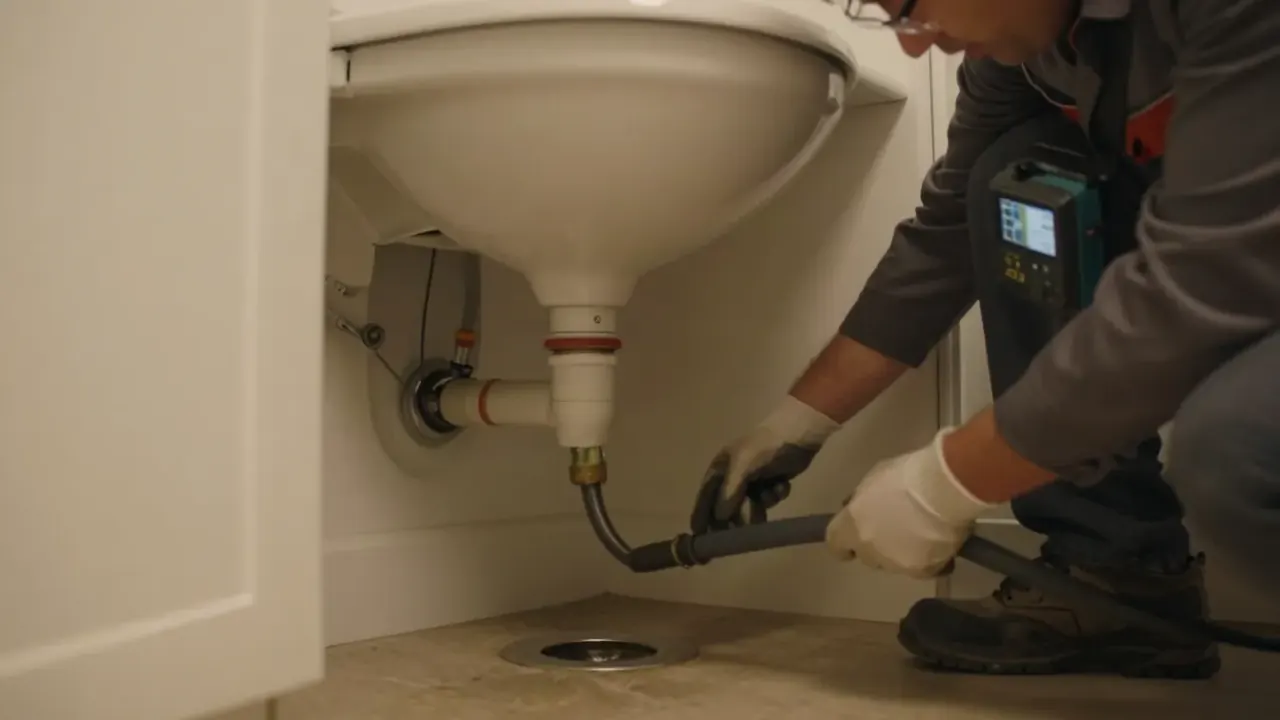
A homeowner in Woburn Center reported a kitchen sink that took nearly two minutes to empty and produced a drain odor after heavy cooking. Clearing the trap helped briefly, but the slow flow returned within days. The recurring pattern suggested grease and organic film farther along the branch rather than a stopper problem alone.
After: We inspected the accessible line, removed the buildup, and ran the tap for several minutes. The sink emptied in under 30 seconds during the final flow check, with no pooling at the basin. We explained what the camera showed and confirmed that the remaining visible pipe section had no obvious blockage.
A North Woburn laundry drain sent water toward a nearby floor drain during washer discharge. The floor drain bubbled and smelled musty, although ordinary sink use seemed normal. The symptoms pointed to a restriction in a shared section carrying higher-volume laundry flow.
After: We checked the accessible route, cleared settled sludge, and tested the system with flowing water. The laundry line accepted the discharge without bubbling at the floor drain during the final test. The homeowner also received an explanation of the remaining pipe condition and the signs that would call for another inspection.
A small Woburn business had a slow washroom drain and recurring odor that returned after routine surface cleaning. Staff noticed the problem most during busy periods, when several fixtures were used close together. The symptoms suggested buildup in a branch serving more than one fixture.
After: We inspected the accessible branch, removed organic film and settled debris, and ran water through the connected fixtures. Drainage was steady during the test, and the odor source was no longer apparent at the serviced drain. We explained what cleaning resolved and what camera findings would justify further work.
Biofilm and sludge can narrow a pipe gradually, so symptoms often return after a quick opening clears only the center of the blockage. We trace the restriction and remove accessible deposits. A biofilm and sludge removal cost Woburn discussion starts with the line's access, length, condition, and cleaning method.
Kitchen sink drains slowly again after repeated quick unclogging
We inspect the kitchen branch and clear the obstruction, then assess whether grease and organic film remain farther down the line. After cleaning, we run the tap and confirm the sink drains without pooling. If the trap or garbage disposal is the cause, we point out that separate issue.
↗02
Basement floor drain smells or backs up during laundry discharge
We check the floor drain and connected line, then use a camera where access allows to locate sludge or a downstream blockage. We clean the affected section and test it with flowing water. If the camera shows a damaged joint or standing water that remains, we explain the finding.
↗03
Several fixtures gurgle while toilets clog repeatedly
We compare symptoms across fixtures and inspect the sewer line when appropriate. A mechanical cleaner or jetting method removes accessible deposits, while camera footage helps separate sludge from roots or scale. We test connected fixtures to confirm whether flow has improved across the system.
↗04
Drain odor returns after surface cleaning and air freshener use
We trace the odor to the affected drain, inspect the trap and accessible line, and remove biofilm or sludge when present. We do not mask the smell with fragrance. If cleaning does not account for the odor, we check for a dry trap or visible connection problem.
↗
Proof you can check
Service Standards
Massachusetts Plumbing License · Commonwealth of Massachusetts
OSHA Safety Certification · Occupational Safety and Health Administration
NASSCO PACP Certification · National Association of Sewer Service Companies
Biofilm and sludge removal in Woburn MA clears sticky organic film and settled debris from drain or sewer pipe walls to restore flow. We first identify whether the restriction is in a fixture branch or a shared line, using a camera when access allows. Then we choose mechanical cleaning or water jetting suited to the pipe. The service addresses buildup; broken pipe, severe scale, or root intrusion may require additional work.
A straightforward accessible drain cleaning often costs $180 to $450 in 2026, while extensive sewer-line work can range from $450 to $1,200 or more. Price depends on access, line length, deposit severity, and whether camera inspection or specialized jetting is needed. We explain the recommended work and upfront price before starting. A camera inspection can prevent paying for the wrong cleaning method.
Yes, when the cleaning method is matched to pipe material and condition; inspection guides that choice. We assess access and visible line condition before using an auger or jetting equipment, and we avoid aggressive treatment where a pipe appears damaged. Older cast iron and newer plastic pipes may need different approaches. If the camera shows a crack or separated joint, we explain repair options rather than treating cleaning as a fix.
There is no fixed schedule for every property; inspect or clean when slow drainage, recurring clogs, or odor returns, and consider annual checks for problem lines. Kitchens with heavy grease use and commercial drains often need more frequent maintenance than an occasional-use bathroom branch. We can recommend an interval after seeing your pipe and usage pattern. A clean line should still be monitored for new symptoms.
Slow drains, recurring clogs, and sewer odors are easier to address before wastewater reaches the floor. Our team checks the line, explains the cleaning method, and tests the flow when the work is complete. Call ClearLine Sewer & Drain Cleaning to arrange service in Woburn.
Call ClearLine Sewer & Drain Cleaning at (781) 851-1094 to discuss a clogged sink, sewer backup, or commercial drain issue in Woburn, MA. Our team answers service inquiries during business hours and handles urgent requests by phone; tell us which fixtures are affected and whether water is actively backing up so we can understand the priority.